November 13, 2026 · Houston Grand Opera · Houston, Texas
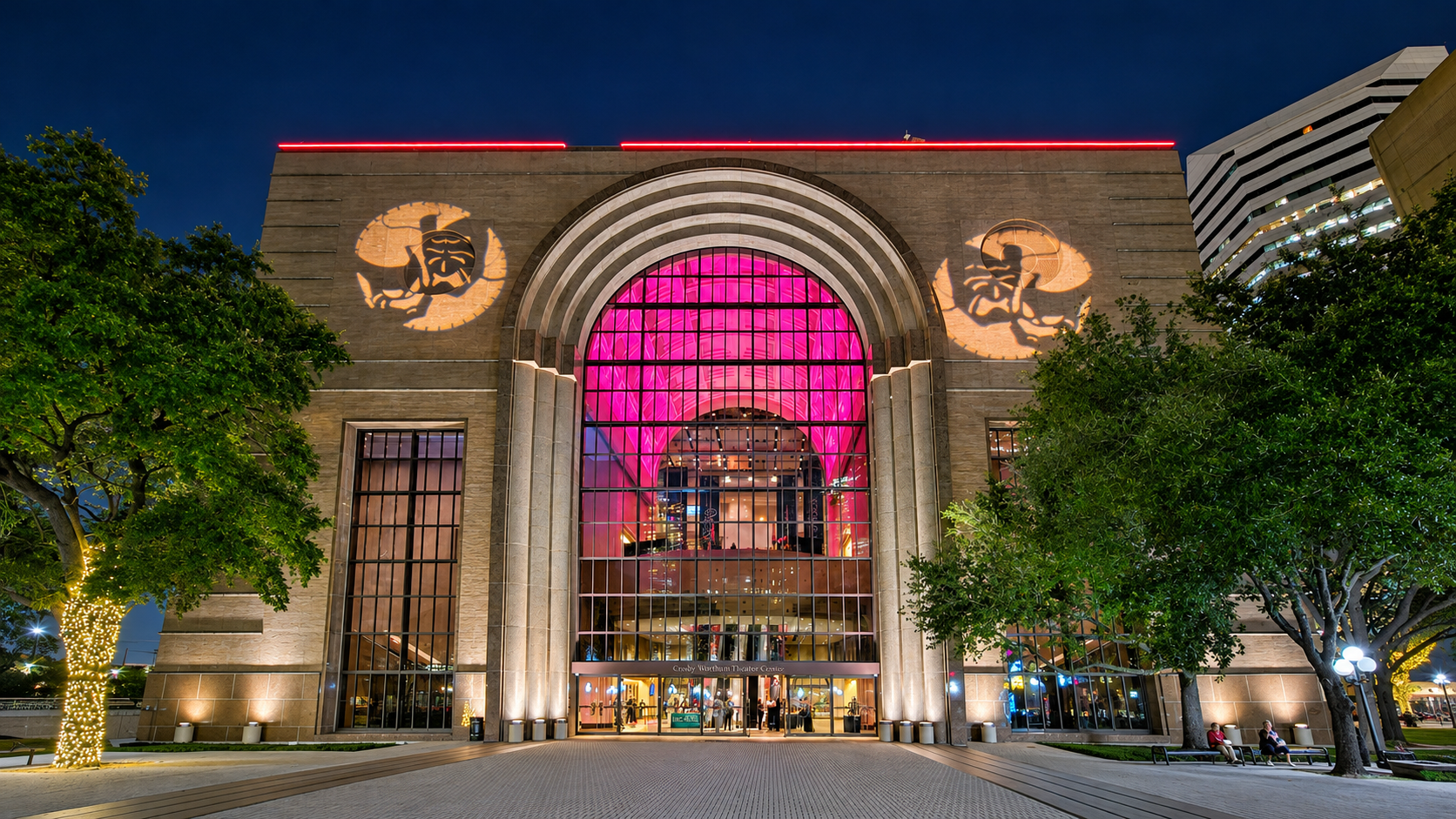 On November 13, my family and I visited Houston Grand Opera for the first time to see Charles Gounod’s Faust. This has long been one of my wife’s and my favorite operas. We know its music well, and there are certain arias and scenes we had been looking forward to hearing and seeing live for years.
We also wanted to introduce our thirteen-year-old son to Faust. He had already attended two operas with us in Austin — Puccini’s Madama Butterfly and La bohème. Both performances had made a strong impression on my wife and me, and we hoped Faust would be another memorable experience.
Before I begin, I should say that I am not a professional music critic, nor do I claim to be objective. I simply love opera and want to share my personal impressions. People seem more inclined to write enthusiastic reviews than critical ones, but I see no reason to hide my disappointment when something doesn't meet my expectations, especially when it concerns an opera I love so much.
Beautiful Sets and Costumes
Let me start with what I really enjoyed.
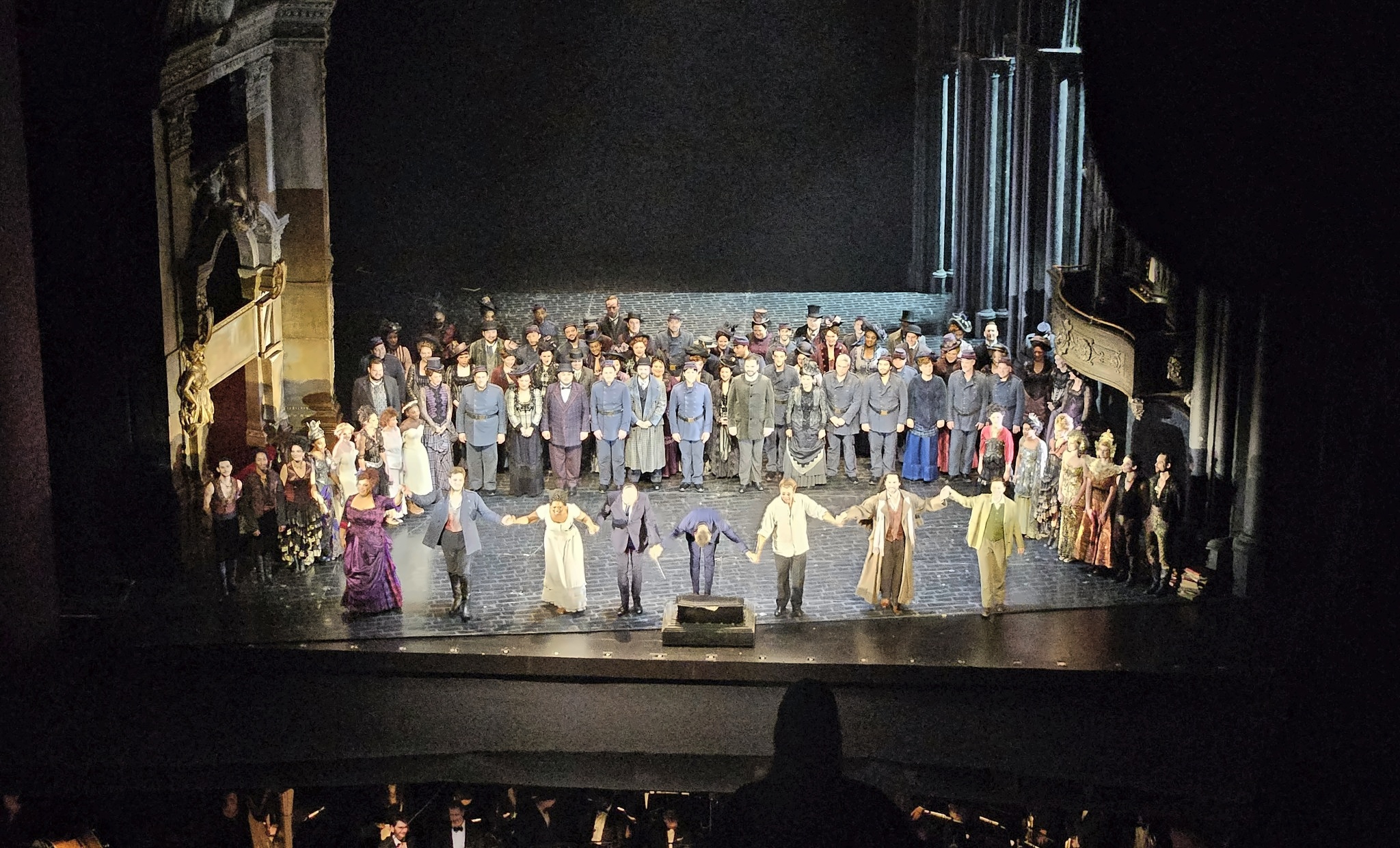
Visually, the production was magnificent. The sets were beautiful, varied, and carefully designed. Scene changes happened surprisingly quickly, and each new setting was interesting to look at. The production maintained a convincing historical atmosphere, with costumes, interiors, and scenery that seemed appropriate to the period.
I particularly enjoyed the stage transformations, including Faust’s and Méphistophélès’s costume changes. Everything happened so smoothly that I sometimes wondered how the performers managed to change their appearance so quickly. In fact, Faust and Méphistophélès changed their appearances with such remarkable speed that I began to suspect they had made a separate bargain with the Devil backstage.
Our son was fascinated by all of this. He was amazed at how rapidly the scenery and costumes changed and how the stage could transform before his eyes. These theatrical effects were among his favorite parts of the evening.
I also want to mention the final scene, when God appears beside the organ, surrounded by clouds of smoke or mist. It was spectacular and solemn.
Overall, I liked the staging and direction. I appreciate productions that preserve the historical atmosphere of an opera, and in this respect, the creative team did an excellent job.
Music That Lacked Emotional Power
Unfortunately, the musical performance left me with a very different impression.
I listened carefully, paid attention to the voices, waited for my favorite musical moments, and hoped the music would eventually sweep me away.
But it never quite happened.
My main disappointment was with some of the tempos chosen by the conductor. This was especially noticeable in the overture and Marguerite’s famous song. To my ears, the music was simply too slow. It lacked momentum, energy, and dramatic tension.
The orchestra generally played well. I didn't notice any serious problems with the musicians' coordination or the technical quality of their playing. It was the interpretation itself that seemed to lack emotional intensity.
There were moments when the orchestra sounded powerful and loud, followed by passages so quiet that I wished I could turn up the volume. The same problem affected the singers, whose voices often seemed too distant and insufficiently powerful.
For me, opera is not just about beautiful melodies and voices. It is drama unfolding through music. When the music loses its energy, the dramatic tension suffers as well.
And that tension was exactly what I missed that evening.
The Soloists and Chorus
Among the soloists, I particularly enjoyed the singers portraying Faust and Siebel. Their voices sounded strong and expressive, and I found their acting convincing.
I liked Méphistophélès as a stage character. His appearance, mannerisms, costume, and acting matched my idea of how this character should be portrayed. Vocally, however, I wanted more power and depth from his bass voice. His voice simply didn't carry well to our section.
Unfortunately, Marguerite's performance was one of my disappointments. I had hoped for a more expressive interpretation of this character, both vocally and dramatically. Her voice didn't quite have the presence and emotional impact I was expecting, at least from where we were sitting. I could see that she was putting a great deal of effort into her performance, but I never felt fully drawn into her character.
I don't want to analyze every singer individually. These are only my personal impressions, and I fully recognize that the experience might have been different from another part of the auditorium.
The chorus, on the other hand, was excellent. It sounded powerful, bright, well-balanced, and confident. Unlike some of the soloists, the chorus carried beautifully even to our seats. The choral passages were among the musical highlights of the evening.
Even in the finale, with its impressive staging and wonderful choral sound, I felt that the solo performances lacked dramatic intensity. As a result, the ending stayed with me more for its visual impact than its musical one.
The Ballet We Never Saw
Another major disappointment was the absence of the famous Walpurgis Night Ballet.
In the Paris Opéra version of Faust, the fifth act includes an extended ballet sequence set during Walpurgis Night. Gounod composed this wonderful music for the opera's Paris Opéra production, and it remains one of the most beautiful orchestral passages in the work.
My wife and I had been especially looking forward to hearing this music performed live and seeing the accompanying dances and spectacular stage effects.
However, Houston Grand Opera chose to omit the ballet from this production.
I understand that opera companies often make cuts and have their own artistic interpretations. Still, I was genuinely disappointed. Given how beautiful and imaginative the scenery and costumes were throughout the performance, I can only imagine what the creative team might have done with the Walpurgis Night scene.
It could have been another highlight of an already visually magnificent production.
Auditorium Acoustics and Visibility
One of my biggest disappointments was the acoustics of the auditorium.
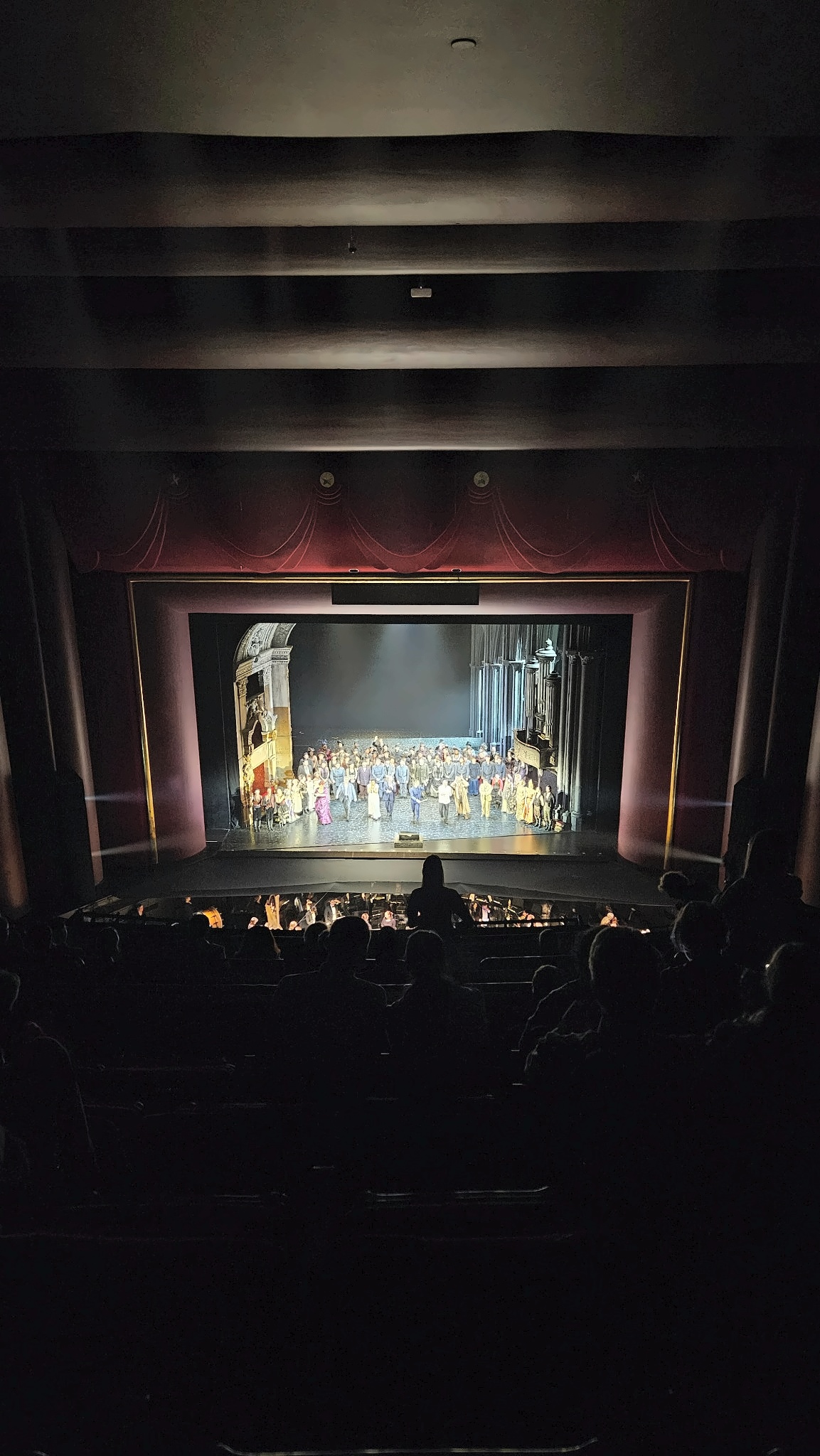 We sat in Grand Tier, Section F, Row F, almost directly in the center. Our tickets cost approximately $100 each.
From these seats, the sound was often surprisingly weak. Both the orchestra and many of the soloists sounded distant and insufficiently powerful. Some passages came through clearly, while others were so quiet that much of their emotional impact was lost.
At times, some of the singers sounded as though they were performing in a neighboring building. A fine building, no doubt, but not the one we had paid to hear them in.
I find this particularly disappointing because an opera house should provide good sound throughout its auditorium, not just in the most expensive sections. There are seating levels above ours, and I can only wonder what the experience is like from there.
We've attended opera performances in Austin, sitting quite far from the stage, and never experienced this problem. The orchestra and singers were clearly audible, and the music carried its full emotional power.
Visibility was another issue. The stage was far below us, making it almost impossible to see the singers' facial expressions or subtle acting. Even the upper part of the stage was partially obstructed. During the cabaret scene, for example, we couldn't see the sign above the set.
After intermission, we used opera glasses to watch the performers, and the experience immediately became more interesting. We could finally see their faces, expressions, and costume details.
Of course, I cannot judge the acoustics of the entire auditorium based on one seating location. But I do believe that every seat sold for an opera performance should offer a satisfying listening experience, regardless of its price.
For me, this was a significant shortcoming of the evening.
The Audience and My Family's Impressions
Judging by the audience's reaction, most people thoroughly enjoyed the performance.
During the first act, there was applause after almost every scene, and at the end of the opera, the applause was long and enthusiastic.
However, I find frequent applause during an opera rather distracting. Opera is a continuous musical and dramatic experience, and interrupting it with applause breaks the tension and atmosphere that the composer and performers have worked to create. Applause certainly has its place, but I believe it should not come at the expense of the dramatic flow.
My wife completely shared my impressions. We both expected more from the musical performance.
Our son, however, loved it. At thirteen, he may not yet pay as much attention to vocal nuances or musical interpretation. Instead, he was fascinated by the scenery, costumes, theatrical effects, and everything happening onstage.
He was apparently more interested in how quickly Faust could change his clothes than in whether the orchestra was playing too slowly. And perhaps he had the better evening because of it.
I'm very glad he enjoyed the evening so much.
The Theater and the Atmosphere
The theater itself made a very good impression on me.
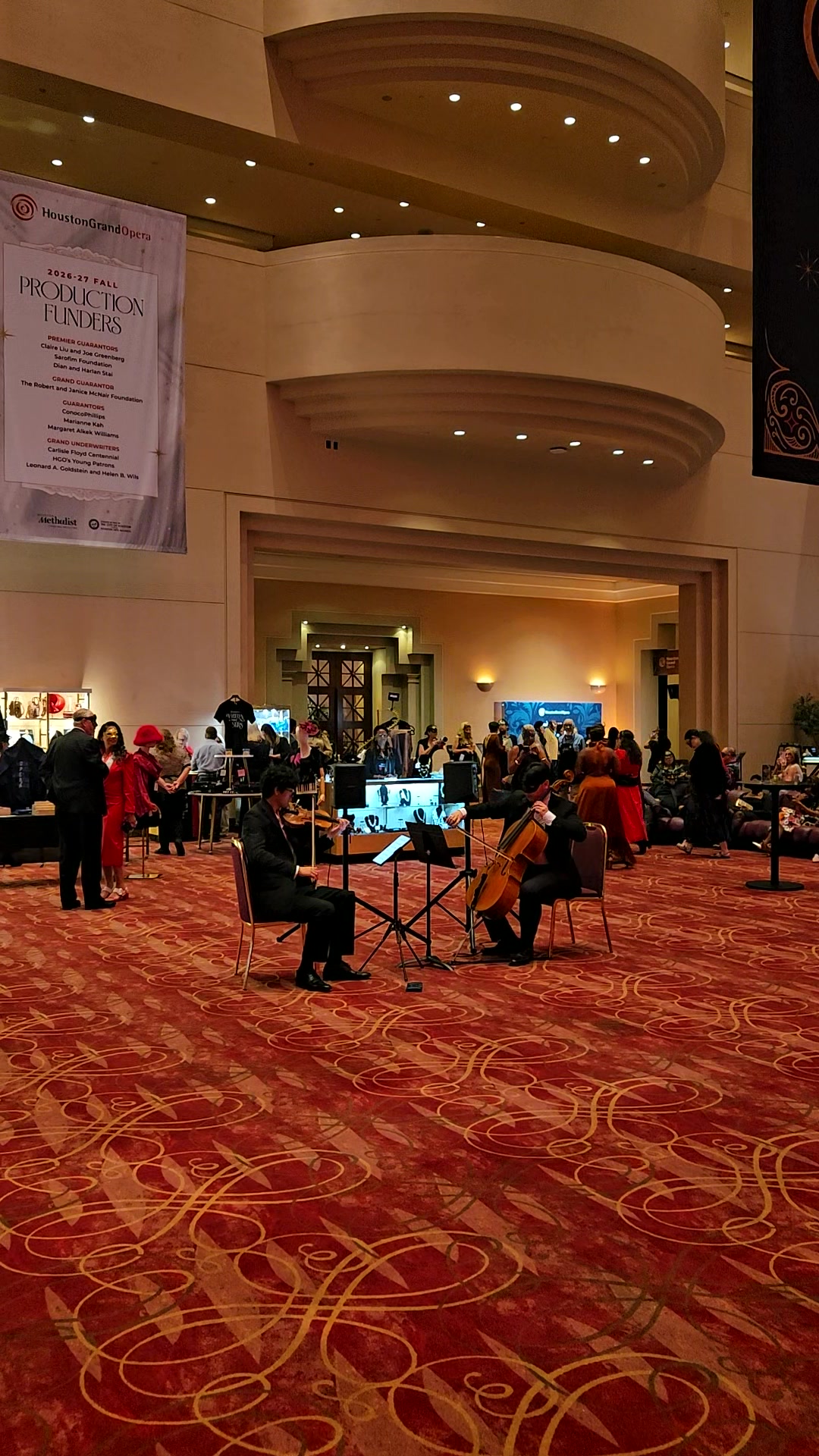 It's a beautiful venue, with comfortable seats and reasonable legroom. The atmosphere in the lobby was festive.
Many audience members were elegantly dressed, some in rather extravagant outfits. A few guests were dressed with such magnificence that I wondered whether they had come to see Faust make a bargain with the Devil or to negotiate one of their own.
It was interesting to watch the crowd and see how much of a special occasion an evening at the opera was for many people.
I also appreciated the smaller details. We were given masks related to the theme of Faust in the lobby. Food and drinks were available at reasonable prices, and two cellists performing in the lobby created a lovely atmosphere before the show.
Final Thoughts
After the performance, I kept asking myself what exactly had been missing.
Perhaps the simplest way to put it is this: the music never made my heart skip a beat.
When we saw Puccini's Madama Butterfly and La bohème in Austin, there were moments when the music and the drama truly took our breath away. We felt deeply involved in what was happening onstage, and those emotions stayed with us long after the performances ended.
I had hoped for something similar from Faust, especially because it is one of our favorite operas.
But despite the beautiful sets, costumes, and some excellent musical moments, that feeling never came.
I am sincerely grateful to Houston Grand Opera, its musicians, singers, designers, and everyone involved in bringing this production to the stage. I understand how much work goes into creating a performance on this scale, and I certainly don't regret traveling to Houston to see it.
For our son, it was a wonderful evening, and that means a great deal to me.
I hope to return to Houston Grand Opera in the future. Despite my disappointment with the acoustics and some aspects of the musical performance, I appreciate the enormous effort that went into this production. I only wish the sound had matched the beauty of what we saw onstage.
What I will remember most about this Faust are its magnificent sets, beautiful costumes, excellent chorus, and spectacular final scene.
I only wish the music — the main reason we came — had left an equally powerful impression.
Production Credits
Performance attended: November 13, 2026
Company: Houston Grand Opera
Venue: Brown Theater, Wortham Theater Center, Houston, Texas
Conductor: Giacomo Sagripanti
Original Stage Director: David McVicar
Revival Director: Peter Relton
Principal Cast:
- Matthew Polenzani — Faust
- Kyle Ketelsen — Méphistophélès
- Pretty Yende — Marguerite
- Sean Michael Plumb — Valentin
- Sun-Ly Pierce — Siébel
- Sam Dhobhany — Wagner
- Deborah Nansteel — Dame Marthe Schwerlein
Share Your Opera Experience
Have you recently attended an opera performance? I'd love to hear about it!
I warmly invite LibrettoArchive readers, especially registered members, to share their experiences from opera houses around the world. Whether you loved a performance or found it disappointing, your impressions are worth sharing.
Don't be shy! You don't need to be a professional critic to write about opera. Just tell us what you saw, what you heard, and how it made you feel.
I'll be happy to publish your reviews here on LibrettoArchive so other opera lovers can enjoy and learn from your experiences.
— Dmitrii Murashev

0 comments
No comments yet. Be the first!
Leave a comment