| Giacomo Puccini operas |
|
• Le Villi (1884) • Edgar (1889) • Manon Lescaut (1893) • La bohème (1896) • Tosca (1900) • Madama Butterfly (1904) • La fanciulla del West (1910) • Il trittico (Il tabarro, Suor Angelica, Gianni Schicchi) (1918) • Turandot (1926) |
“Le Villi” by Giacomo Puccini
♡Premiere / date of written: 31 May 1884
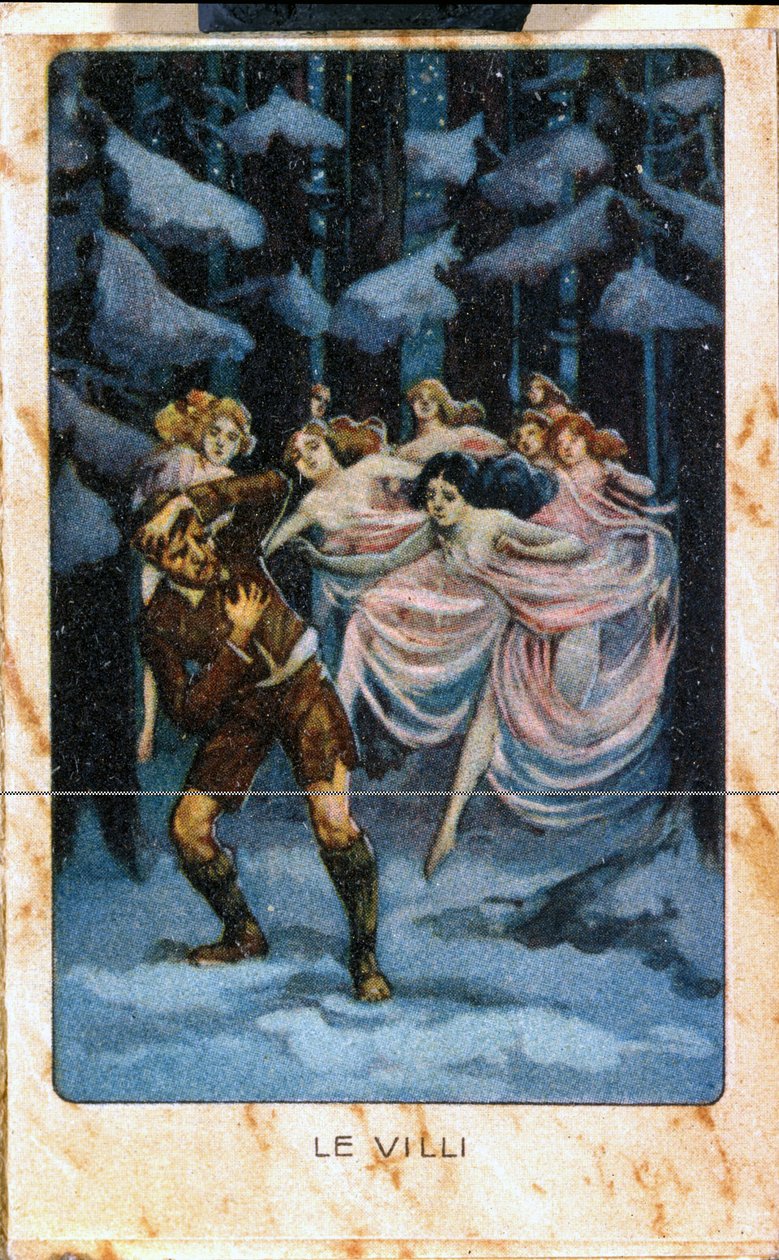
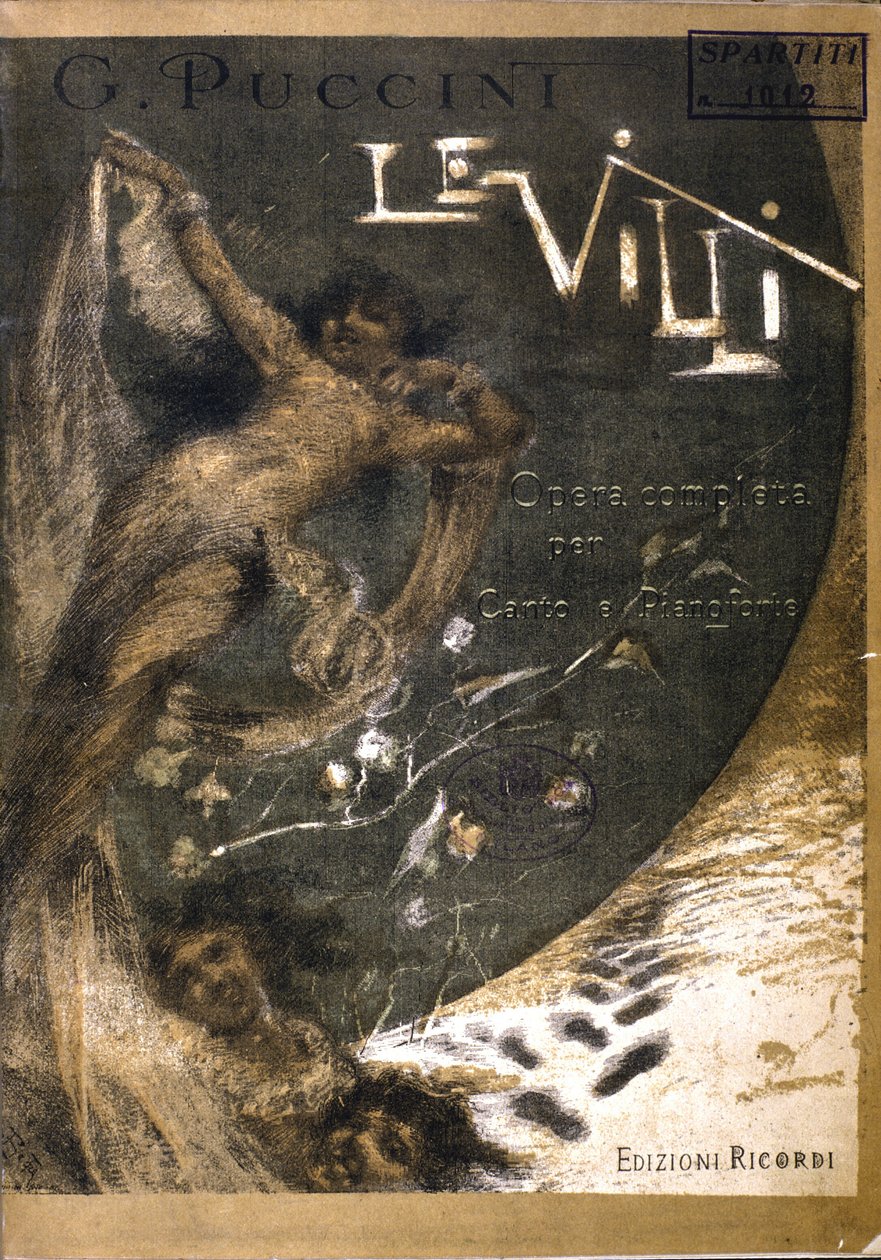
Le Villi (The Willis or The Fairies) is an opera-ballet in two acts that marks the operatic debut of Italian composer Giacomo Puccini. Composed to an Italian libretto by Ferdinando Fontana, it is based on the short story Les Willis by Jean-Baptiste Alphonse Karr, which draws from the same Central European legend used in the famous ballet Giselle.
Libretti
Italian–English side-by-side translation
| # | Language | Authors |
|---|---|---|
| 1 |
Italian
  |
Ferdinando Fontana |
| 2 |
English
|
Dmitrii Murashev |
original libretto
side-by-side of the original libretto
Notes on the Libretto
Ferdinando Fontana’s libretto belongs to a work whose textual history is unusually complex for so brief an opera. Puccini first composed it as Le Willis, a “legend in one act,” performed at Milan’s Teatro Dal Verme on 31 May 1884. Its success prompted an expansion into the two-act Le Villi, and further revisions followed. Thus the familiar form of the opera represents not its original state, but the result of several stages of revision.
One point requiring particular care in the English translation is Fontana’s Villi. These are not simply “witches,” as the term is sometimes rendered, but the supernatural maidens of the legend: women who have died after being betrayed in love and return to dance faithless men to death. The translation therefore uses Wilis when referring to the spirits themselves, preserving the specific identity of the legendary beings.
Anna’s “Non son più l’amor. / Son la vendetta!” presents another small but significant choice. Rather than the literal but less natural “I am Revenge,” it is rendered “I am no longer Love. / I am Vengeance!” The personification is essential to the force of the line: Anna does not merely return to take revenge upon Roberto; in the supernatural world of the final act, she has become its embodiment.
History
| May 31, 1884 | Premiere of Giacomo Puccini's first opera, 'Le Villi', at the Teatro Dal Verme in Milan. |
Images
Related links
- Le Villi: Italian–English Side-by-Side Libretto With Translation — LibrettoArchive Blog
- Wikipedia, the free encyclopedia