| Pietro Mascagni operas |
|
• Cavalleria rusticana (1890) • Zanetto (1896) |
“Cavalleria rusticana” by Pietro Mascagni
♡Premiere / date of written: 17 May 1890
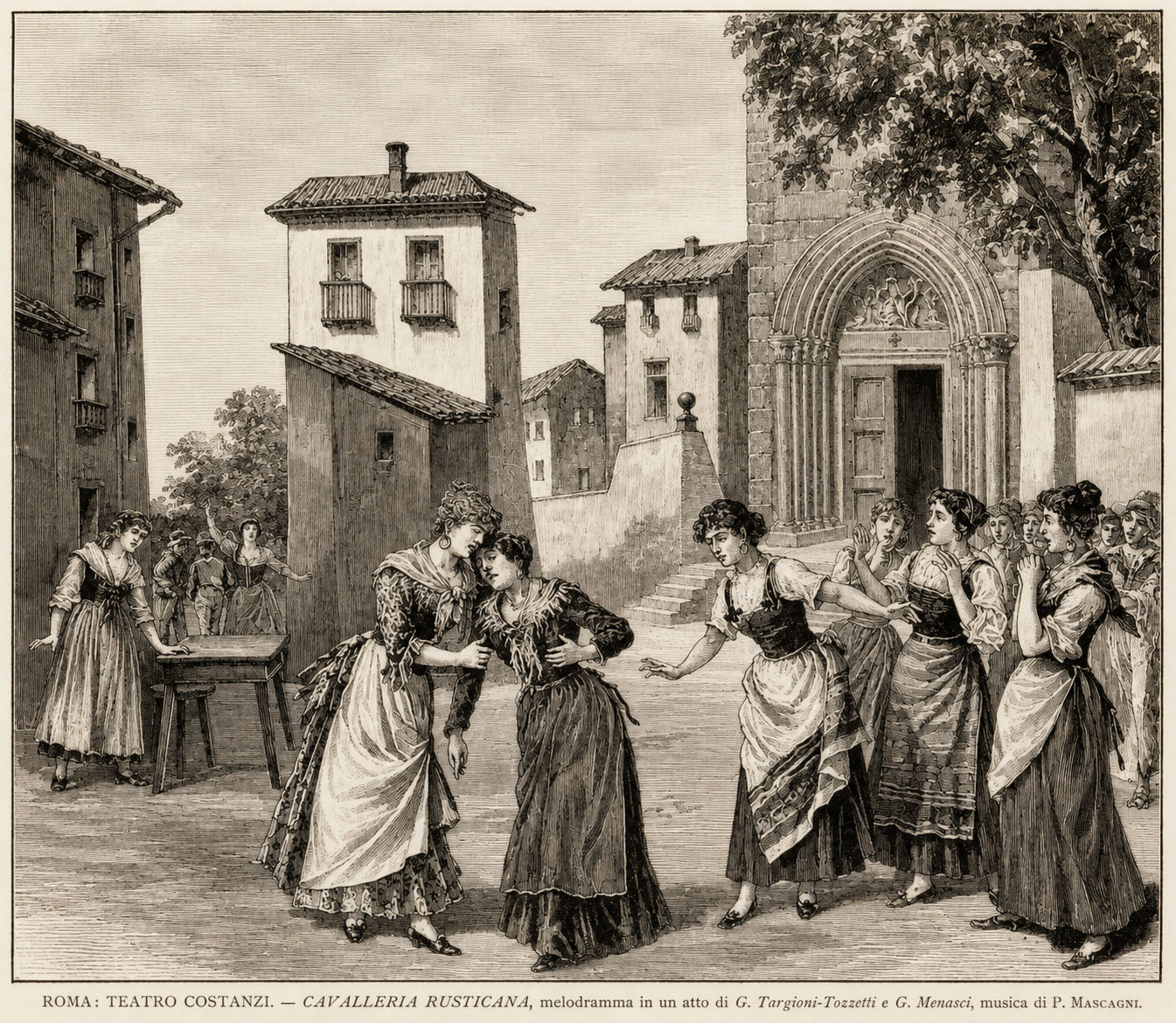
Considered one of the defining works of Italian verismo, Cavalleria rusticana premiered on May 17, 1890, at the Teatro Costanzi in Rome. Its intense drama, memorable melodies, and vivid portrayal of passion, jealousy, and revenge brought Mascagni immediate international success. Since the 1890s, the opera has frequently been paired with Ruggero Leoncavallo’s Pagliacci in the celebrated double bill known as “Cav/Pag.”
Libretti
Italian–English side-by-side translation
| # | Language | Authors |
|---|---|---|
| 1 |
Italian
  |
Giovanni Targioni-Tozzetti, Guido Menasci |
| 2 |
English
|
|
| 3 |
Russian
|
Юрий Георгиевич Димитрин |
original libretto
side-by-side of the original libretto
Notes on the Libretto
The English text now presented on LibrettoArchive is a new translation prepared from the Italian libretto, replacing an older English version by Willard G. Day. That translation, published in an early twentieth-century Rullman souvenir libretto, frequently reshaped the text for rhyme and theatrical effect. At times the departure is considerable: Lola v’adorna il tetto in malo modo—Santuzza’s bitterly euphemistic accusation that Lola is dishonoring Alfio’s home—became the far more explicit “Lola has turned your home into a brothel.” The new translation retains the indirection of the Italian rather than intensifying it.
Other phrases resist neat English equivalents. The recurring compare and comare are traditional forms of address deeply colored by the opera’s Sicilian setting; they have therefore been retained as “Compare” and “Comare” rather than flattened into “Master” or “Mistress.” Santuzza’s terrible A te la mala Pasqua, spergiuro! likewise gains force from its stark simplicity: “A bad Easter to you, perjurer!”
The final confrontation contains an equally important detail easily obscured in translation. Turiddu embraces Alfio and bites his right ear; Alfio’s avete morso a buono acknowledges that the challenge is meant in earnest. An early English libretto itself explains the bite as part of the rustic Sicilian code governing their deadly encounter.
History
| April 11, 1890 | Italian composer Pietro Mascagni's "Cavalleria rusticana" received one of its early performances in Rome following its successful premiere earlier that year. |
| May 17, 1890 | Mascagni's "Cavalleria rusticana" (often translated as "Rustic Chivalry") received its world premiere at the Teatro Costanzi in Rome. |
| September 7, 2018 | San Francisco Opera season opened with a double bill of Mascagni’s "Cavalleria Rusticana" and Leoncavallo’s "I Pagliacci". |
Images
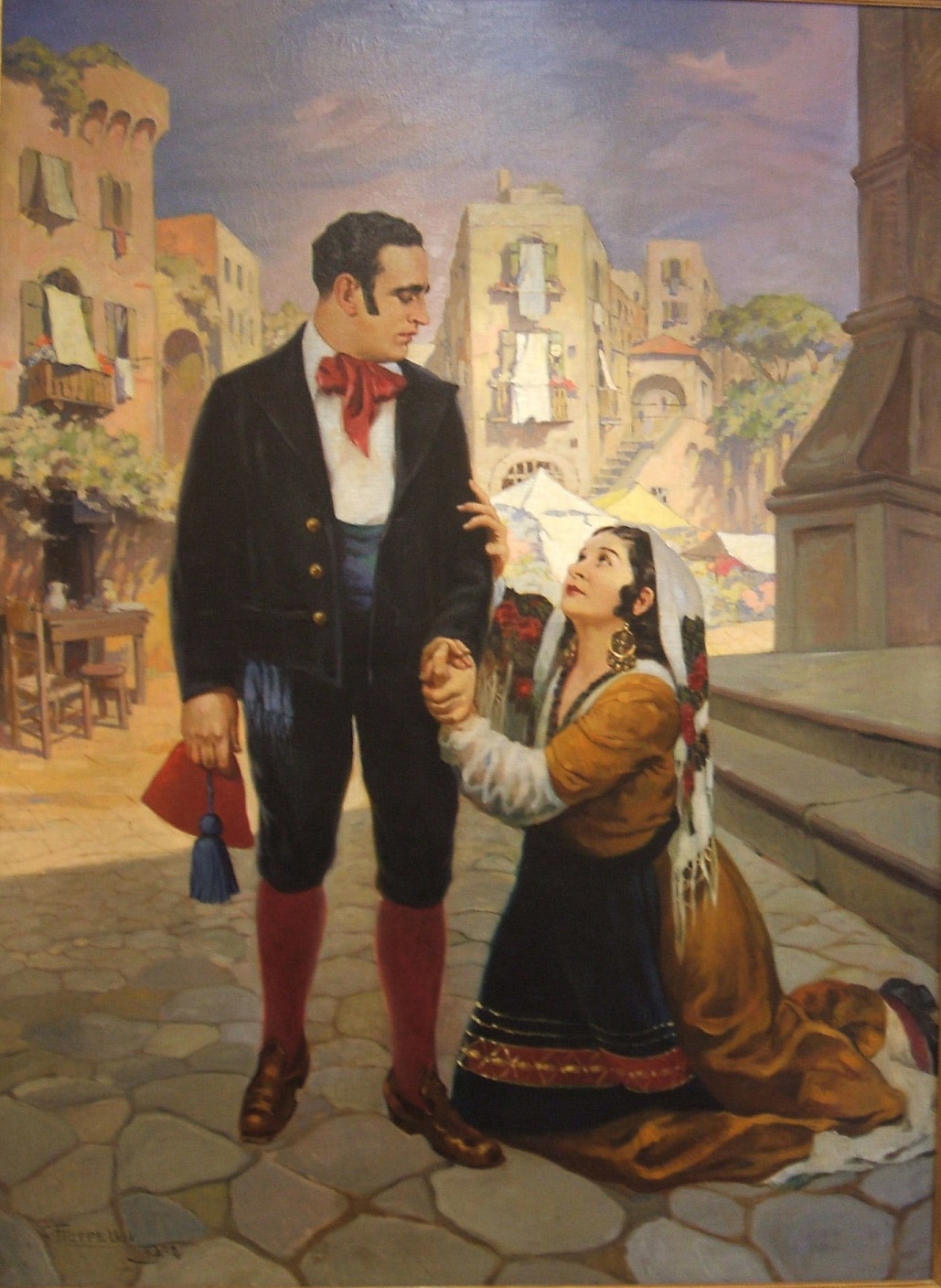
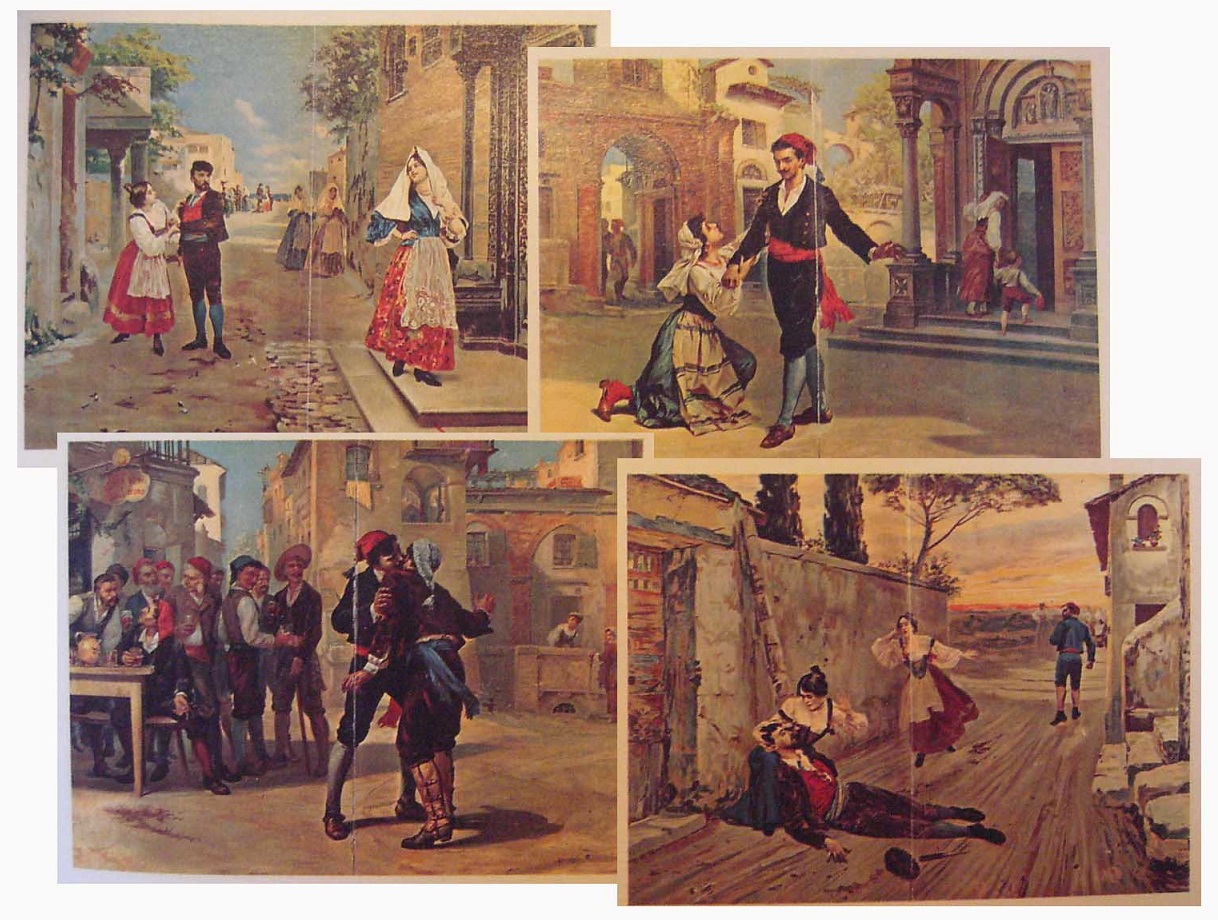
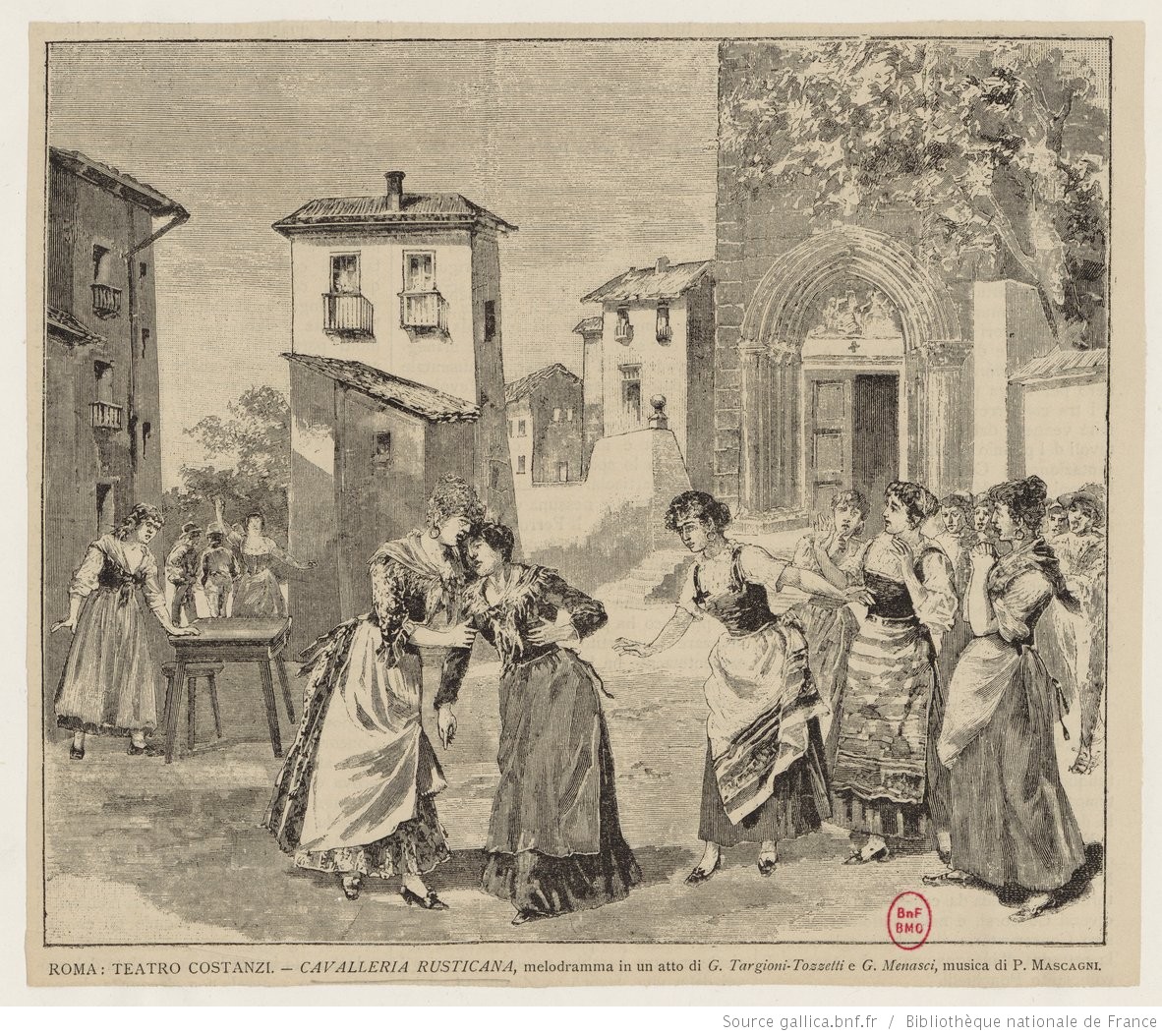
![Final scene from Pietro Mascagni's opera Cavalleria rusticana.
Finale della Cavalleria Rusticana. "Hanno Ammazzato compare Turiddu !" Eseguita dal vero alle rappresentazioni del Teatro alla Scala di Milano : [estampe] / da A. Bonamore](https://www.librettoarchive.com/assets/images/composer_12_opera_045_3.jpg "Final scene from Pietro Mascagni's opera Cavalleria rusticana")
Notable videos
|
Renata Tebaldi sings Voi Lo Sapete
Renata Tebaldi sings "Voi Lo Sapete" (Cavalleria Rusticana) Mascagni |
Audio recordings
| Year | Cast | Conductor, Opera chorus and orchestra |
Label, Comment |
Buy |
|---|---|---|---|---|
| 1934 | Santuzza — Iva Pacetti, Turiddu — Beniamino Gigli, Alfio — Mario Basiola, Lucia — Giuseppe Nessi |
Leone Paci La Scala Orchestra and Chorus, Milan |
Audio CD: Opera D'Oro OPD-9009 |

|
| 1953 | Santuzza — Maria Callas, Turiddu — Giuseppe Di Stefano, Alfio — Rolando Panerai, Lucia — Ebe Ticozzi, Lola - Anna Maria Canali |
Tullio Serafin La Scala Orchestra and Chorus, Milan |
Audio CD: EMI CD Cat: 7243 5 56287 2 5 |

$14.14 |
| 1962 | Santuzza — Victoria de Los Angeles, Turiddu — Franco Corelli, Alfio — Mario Sereni, Lucia — Corinna Vozza, Lola — Adriana Lazzarini |
Gabriele Santini Rome Opera Orchestra and Chorus |
Audio CD: EMI CD Cat: 72438-19968-2-9 |

$19.05 |
| 1976 | Santuzza — Julia Varady, Turiddu — Luciano Pavarotti, Alfio — Piero Cappuccilli, Lucia — Ida Bormida, Lola - Carmen Gonzales |
Gianandrea Gavazzeni National Philharmonic Orchestra London Voices |
Audio CD: Decca Classics Cat: 00289 414 5902 |

$9.56 |
| 1983 | Santuzza — Elena Obraztsova, Turiddu — Plácido Domingo, Alfio — Renato Bruson, Lucia — Fedora Barbieri |
Georges Prêtre La Scala Orchestra and Chorus, Milan |
Audio CD: Philips 416 137-2 |

$14.58 |
Video recordings
| Year | Cast | Conductor, Opera chorus and orchestra, Director |
Label, Comment |
Buy |
|---|---|---|---|---|
| 1983
|
Santuzza — Elena Obraztsova, Turiddu — Plácido Domingo, Alfio — Renato Bruson, Lucia — Fedora Barbieri |
Georges Prêtre La Scala Orchestra and Chorus, Milan Franco Zeffirelli |
DVD: Deutsche Grammophon Cat: DG 073 4033 |

$23.95 |

Related links
- Cavalleria rusticana: Italian–English Side-by-Side Libretto With Translation — LibrettoArchive Blog
- Wikipedia, the free encyclopedia