| Leoš Janáček operas |
|
• Jenůfa (1904) |
“Jenůfa” by Leoš Janáček
♡
Read Jenůfa with the original libretto and a clear English translation presented side by side.
See on Amazon – $16.49 → 📄 Preview sample (PDF)Premiere / date of written: 24 January 1904
Jenůfa is an opera in three acts by Leoš Janáček, based on the play Její pastorkyňa (Her Stepdaughter) by Gabriela Preissová. Janáček composed the opera between 1896 and 1902, setting the text in prose rather than using a traditional verse libretto. It was first performed at the National Theatre in Brno on January 21, 1904.
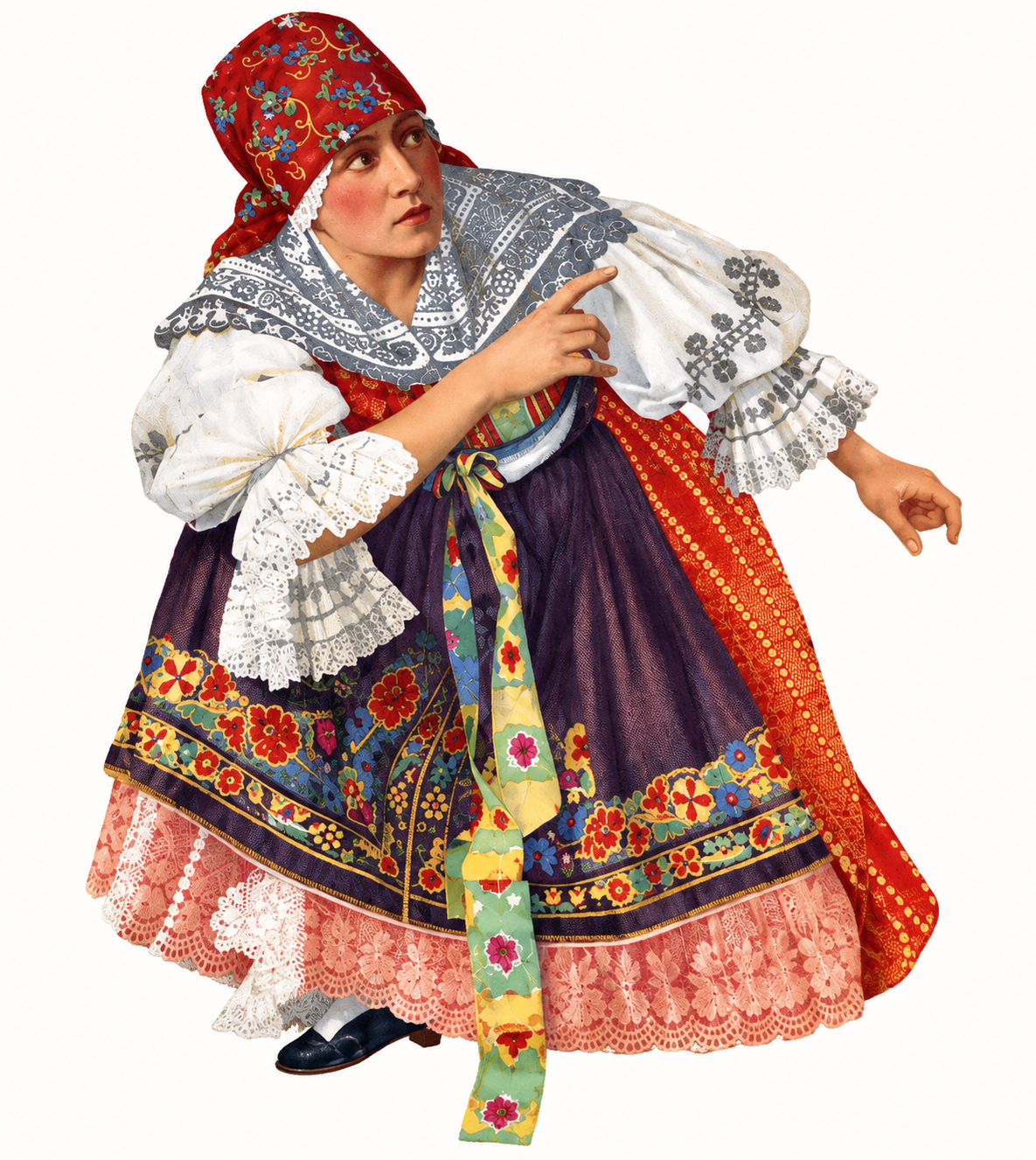
The story takes place in a Moravian village and centers on Jenůfa, a young woman expecting a child by Števa, a man who is unwilling to marry her. Her stepmother, the Kostelnička, tries desperately to protect Jenůfa from the disgrace that an unmarried mother would face in their community. What begins as an attempt to save her reputation leads to a terrible decision and its consequences.
The world of Jenůfa is small and closely knit, where family conflicts unfold under the constant pressure of neighbors, tradition, and social judgment. Janáček’s music is unusually direct and closely connected to the rhythms of Czech speech, giving much of the drama an immediate, almost conversational quality.
Although the story is often dark, Jenůfa is not simply a tragedy. Its final scenes turn toward confession, forgiveness, and the possibility of beginning again.
Libretti
Czech–English side-by-side translation
| # | Language | Authors |
|---|---|---|
| 1 |
Czech
  |
Leoš Janáček |
| 2 |
English
|
original libretto
side-by-side of the original libretto
Notes on the Libretto
Janáček fashioned the libretto of Jenůfa from Gabriela Preissová’s prose drama Její pastorkyňa, and the spoken character of that source remains strongly present. The text often moves in short phrases, repetitions, interruptions, and regional forms rather than in conventional operatic verse. In preparing the Czech–English side-by-side text, forms such as včil, lúbím, děvčica, and chlapčok were therefore preserved rather than silently regularized into modern standard Czech.
Comparison of libretto and score sources also revealed an important editorial problem: some prose versions omit repetitions or stage directions that belong to Janáček’s musical setting. Where the score clearly supports such material, the repetitions have been retained. In several places, apparently minor discrepancies proved significant—for example, restoring Toť zrovna jde!... before Laca’s entrance, or recovering the complete phrase Dosti smrtelného ponížení a muk vás čeká! rather than leaving the sentence grammatically and dramatically incomplete.
The Czech also contains expressions that resist literal English. Potěš tě Pánbůh, for instance, is not simply a greeting: it is a formula of consolation, best understood as “May God comfort you.” Such phrases are small, but they reveal how closely the language of Jenůfa belongs to its world of family, village custom, religion, and spoken Moravian life.
Images
Printed Editions
| Year | Edition | Publisher | Buy |
|---|---|---|---|
| 2026 | Jenůfa: Side-by-Side Czech–English Opera Libretto | DM’s Opera Series |
|
Related links
- Janáček’s Jenůfa in Czech and English — LibrettoArchive Blog
- Wikipedia, the free encyclopedia