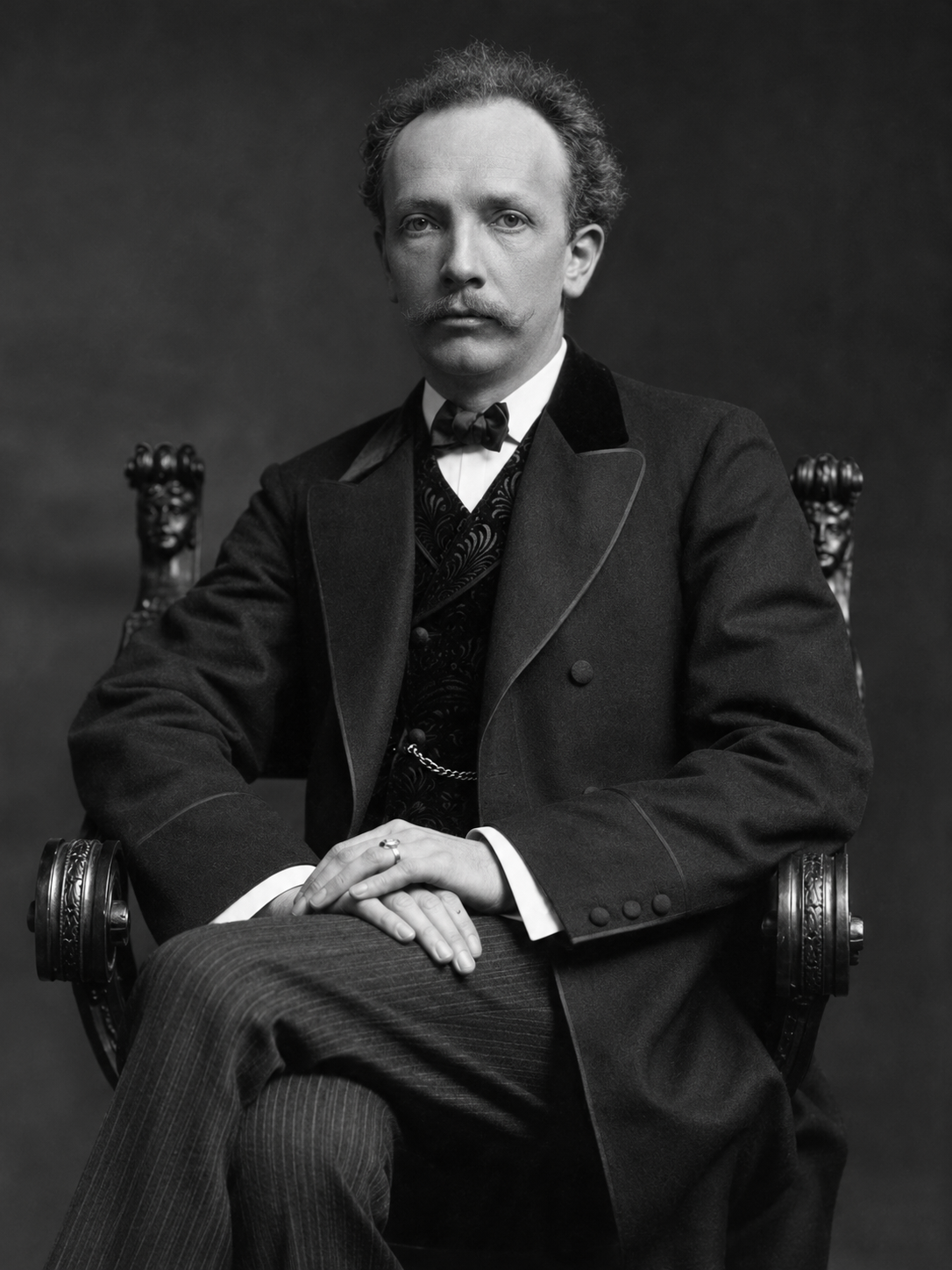
Richard Strauss
Richard Strauss (1864–1949) was a German composer and conductor, and one of the most influential figures in late-Romantic music and twentieth-century opera. Renowned for his brilliant orchestration, dramatic intensity, and rich harmonic language, Strauss expanded the expressive possibilities of opera while maintaining a strong connection to the German Romantic tradition.
Born in Munich, Strauss first gained international recognition through his symphonic poems, including Don Juan, Also sprach Zarathustra, and Ein Heldenleben. His operatic breakthrough came with Salome (1905), a daring adaptation of Oscar Wilde’s play that shocked audiences with its subject matter and revolutionary musical language. He followed it with Elektra (1909), an intensely dramatic work that pushed traditional harmony to its limits.
Strauss subsequently explored a more lyrical and elegant style in Der Rosenkavalier (1911), one of his most beloved operas. His long collaboration with the Austrian poet and librettist Hugo von Hofmannsthal produced several masterpieces, including Ariadne auf Naxos, Die Frau ohne Schatten, and Arabella. His final opera, Capriccio (1942), reflects on the relationship between words and music, a question central to the art of opera itself.
Throughout his long career, Strauss demonstrated an extraordinary ability to portray human emotions through the orchestra and the singing voice. His operas remain central to the international repertoire, admired for their psychological depth, demanding vocal writing, and remarkable orchestral color.
Operas
| Opera | Premiere or date of written | Libretti available |
|---|---|---|
| Salome | 1905, December 9 | |
| Elektra | 1909, January 25 | |
Der Rosenkavalier  |
1911, January 26 | |
| Ariadne auf Naxos | 1912, October 25 | |
| Die Frau ohne Schatten | 1919, October 10 | |
| Arabella | 1933, July 1 | |
| Capriccio | 1942, October 28 |