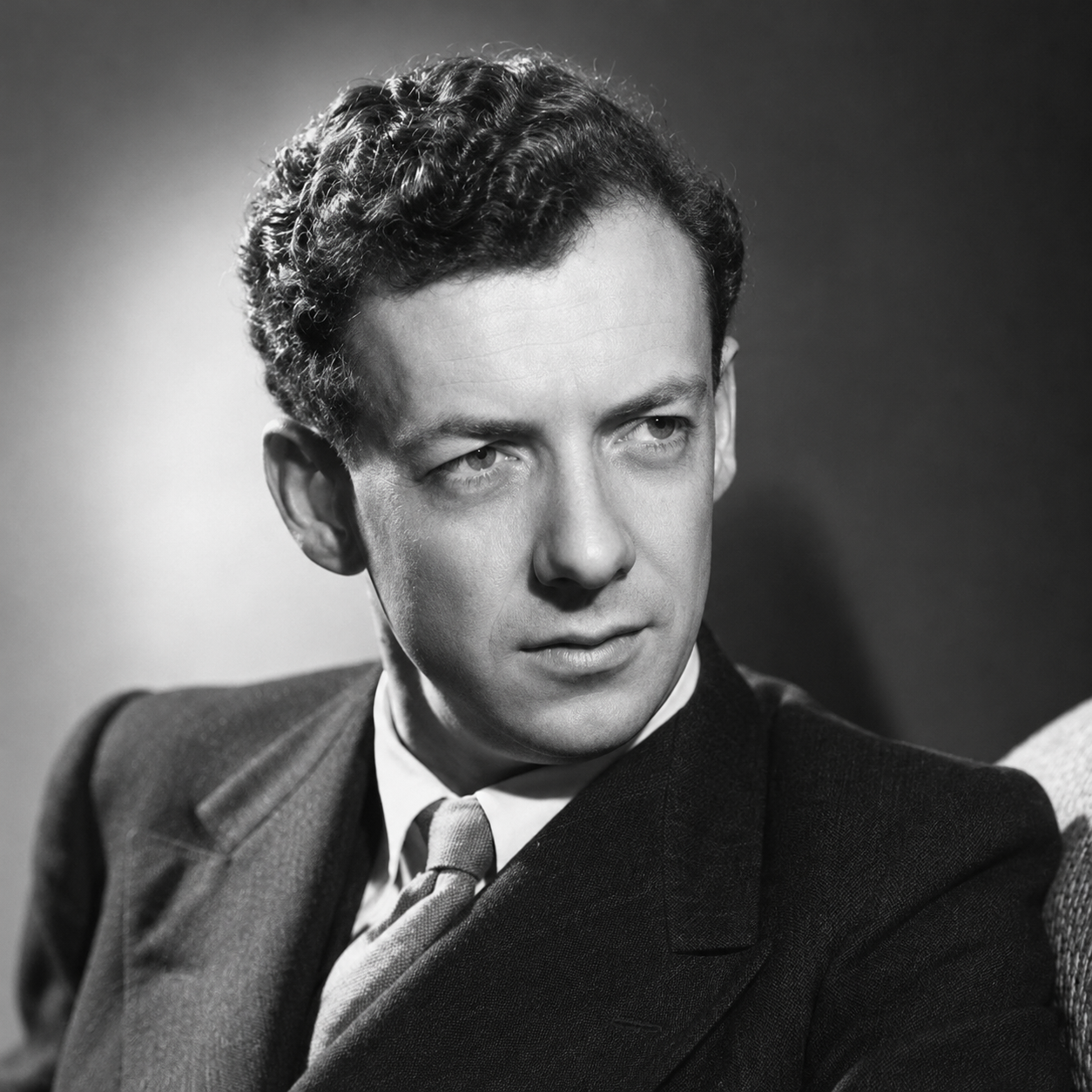
Benjamin Britten
Benjamin Britten (1913–1976) was one of the most influential British composers of the twentieth century and a central figure in the revival of English opera. His music combines lyrical beauty, psychological depth, and a distinctive dramatic sensitivity, often exploring themes of innocence, isolation, moral conflict, and the individual's struggle against society.
Britten achieved international recognition with Peter Grimes (1945), an opera that established him as a major voice in modern musical theater. His subsequent stage works include The Rape of Lucretia (1946), Albert Herring (1947), Billy Budd (1951), The Turn of the Screw (1954), A Midsummer Night's Dream (1960), and Death in Venice (1973). His operas are distinguished by expressive vocal writing, imaginative orchestration, and an exceptional ability to reveal the inner lives of their characters.
Beyond opera, Britten composed orchestral, choral, and chamber music, including the celebrated War Requiem (1962). Together with tenor Peter Pears and producer Eric Crozier, he founded the Aldeburgh Festival in 1948, creating an important center for musical performance and artistic collaboration. His legacy remains fundamental to modern British music and the operatic repertoire.
Operas
| Opera | Premiere or date of written | Libretti available |
|---|---|---|
| Peter Grimes | 1945, June 7 | |
| Billy Budd | 1951, December 1 | |
| The Turn of the Screw | 1954, September 14 | |
| A Midsummer Night's Dream | 1960, June 11 |